GRAPHS FOR SMALL MEN TRAPPED INSIDE SMALLER BODIES
(eg: slater)
by maya & Slate (he doesn't deserve an r)
emotional stability & creativity
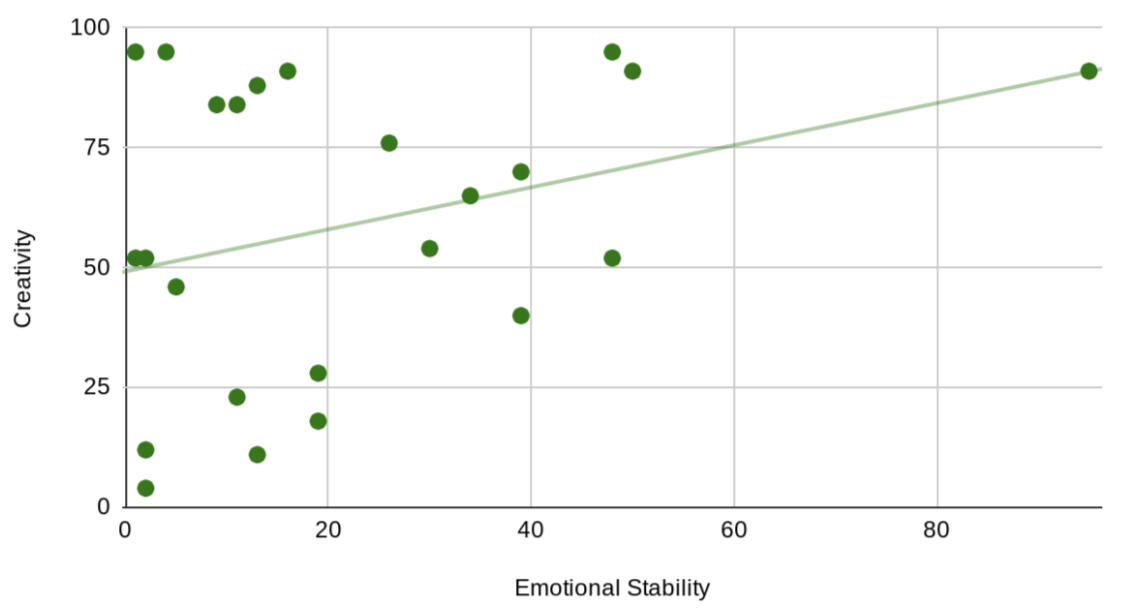
The graph has a positive correlation: the higher someone's emotional stability, the more creative they are. If someone has an emotional stability score of 50 points, they would have a creativity score of 85 points.
averages & studd scoring
STUdd vs class average: epic showdown
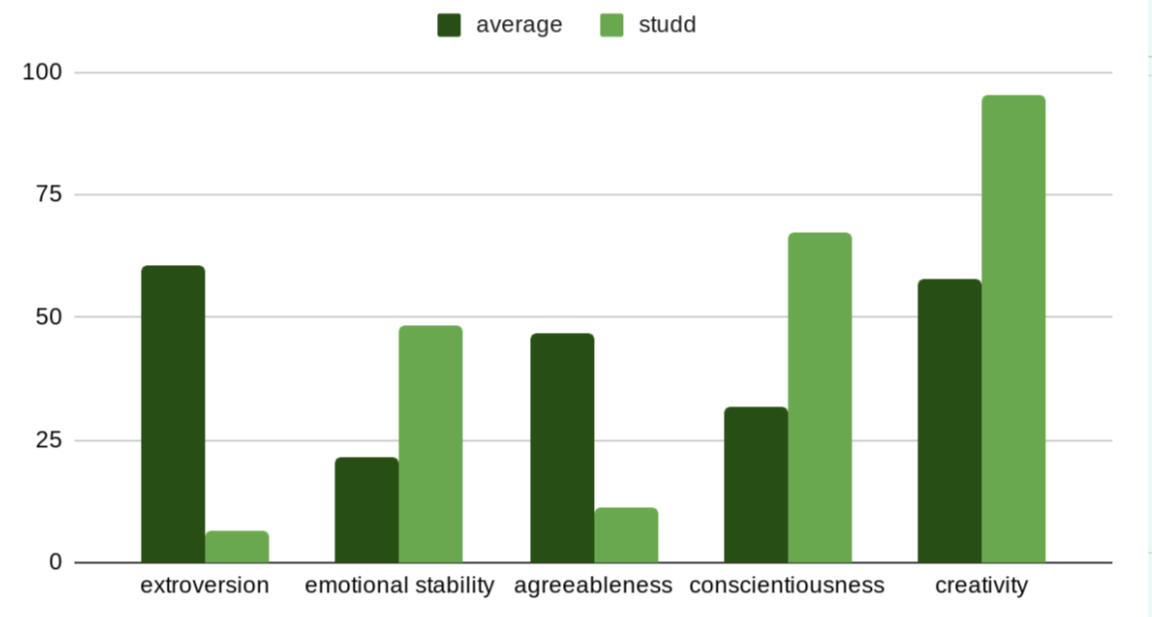
Class Averages
Emotional stability: 21.3
Extroversion: 60.3
Agreeableness: 46.2
Conscientiousness: 31.2
Creativity: 57.5
conclusions
Mr Studd generally scores higher; this is because the averages between a large number of people are bound to be more neutral, due to the varying scores on each end of the spectrum. In addition to this, the chosen profession of Mr Studd may be the reason for some of the varying scores - as a person that is allowed to work with children, it is necessary to have a certain degree of emotional stability, and as a teacher, you are probably more conscientiousness than the average child.
Height & wingspan
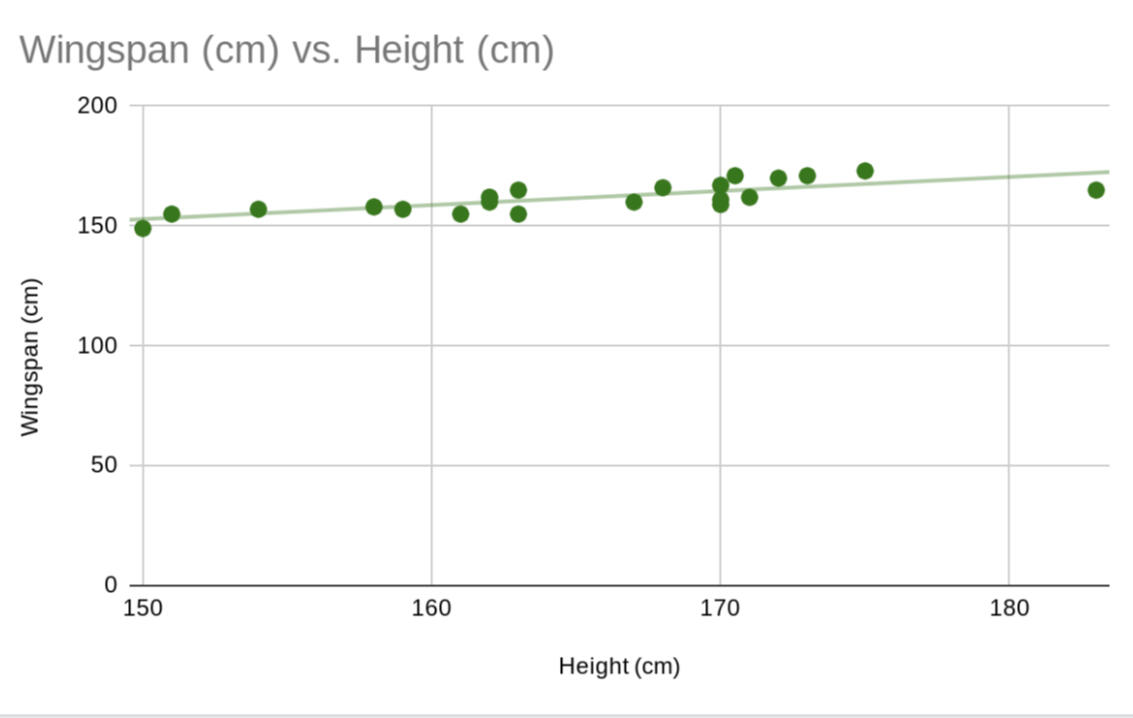
This graph shows that the taller you are, the bigger your wingspan is. If you are 250 cm tall (according to the trend shown on the left), it is fair to assume that you'd have a wingspan of 200 cm.
However, with data such as this, it is impossible to be entirely accurate. This is due to the differing proportions of each human body.
Agreeableness
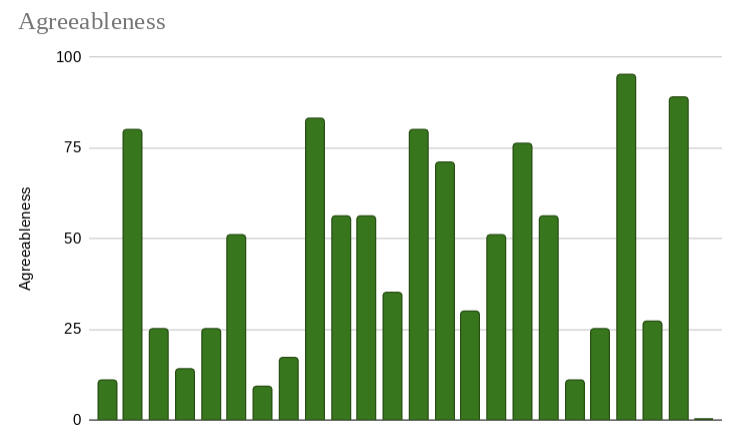
According to this graph, the average would be estimated as 50. This is different from the actual mean, because it is impossible to be entirely accurate by just looking at the graph. The modal groups are 56, and 25. Finally, the median is 43, lying in between the two middle numbers.
own investigation: SPATIAL IQ & HEIGHT
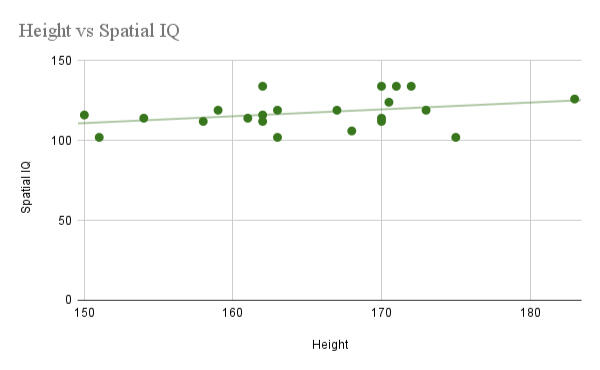
This chart shows that the taller you are, the higher your spatial IQ tends to be. This makes sense, since you would have a wider range of vision as a taller person (probably).
Overall, there are a plethora of limitations throughout these graphs & analysis - especially the sectors that include measures of IQ, and the Big Five personality quizzes. In these two instances, the main issue lies with the fact that they are pseudosciences, and while there are plenty of studies that suggest their value, there are also plenty of studies that discount them.
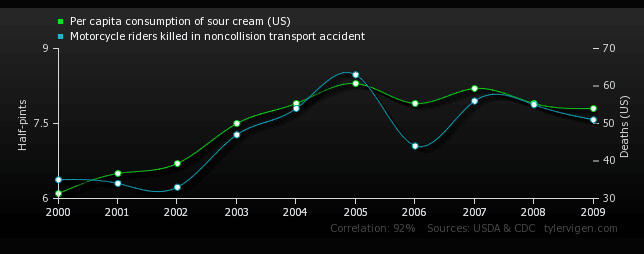
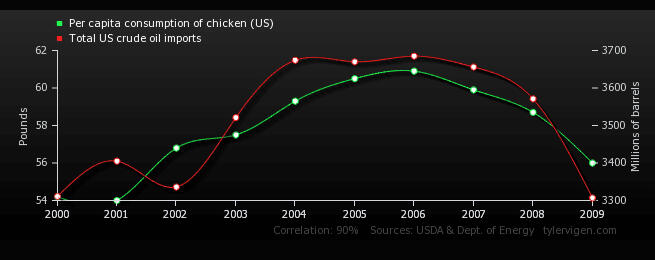
Not only this, but also the correlation between the two are not necessarily linked; correlation is not causation, as proved in the examples below.